

Image: Immersive audio environment with dynamic spatial sound projection
Image: © Ulrich Buckenlei | Visoric GmbH 2025
Spatial sound has long become more than an acoustic gimmick – it is evolving into the language of the digital world. Spatial Audio allows sound to be integrated as a tangible element in the design of vehicles, factories, or immersive environments. The combination of technology, perceptual psychology, and precision creates new forms of interaction that people intuitively understand.
Whether in manufacturing, training, or design processes – 3D audio is the invisible link between humans and machines.
How Space Becomes Sound – Precision Through Acoustics
Spatial Audio is based on the precise simulation of how sound behaves in space. Every tone has direction, distance, material resonance, and motion. The technology calculates all of this in real time, generating an acoustic field that adapts to the user’s position and viewing direction.
This creates the illusion that a sound source is truly “there” – audible, localizable, and physically perceptible.
Especially in industrial applications, this precision offers enormous advantages. Operators can hear machine states before they see errors. Engineers experience data in three-dimensional form. The physical environment becomes perceptible through sound before it is even built.
- Real-time rendering of three-dimensional sound fields
- Head tracking for dynamic listening perspectives
- Integration into XR, automotive, and industrial environments
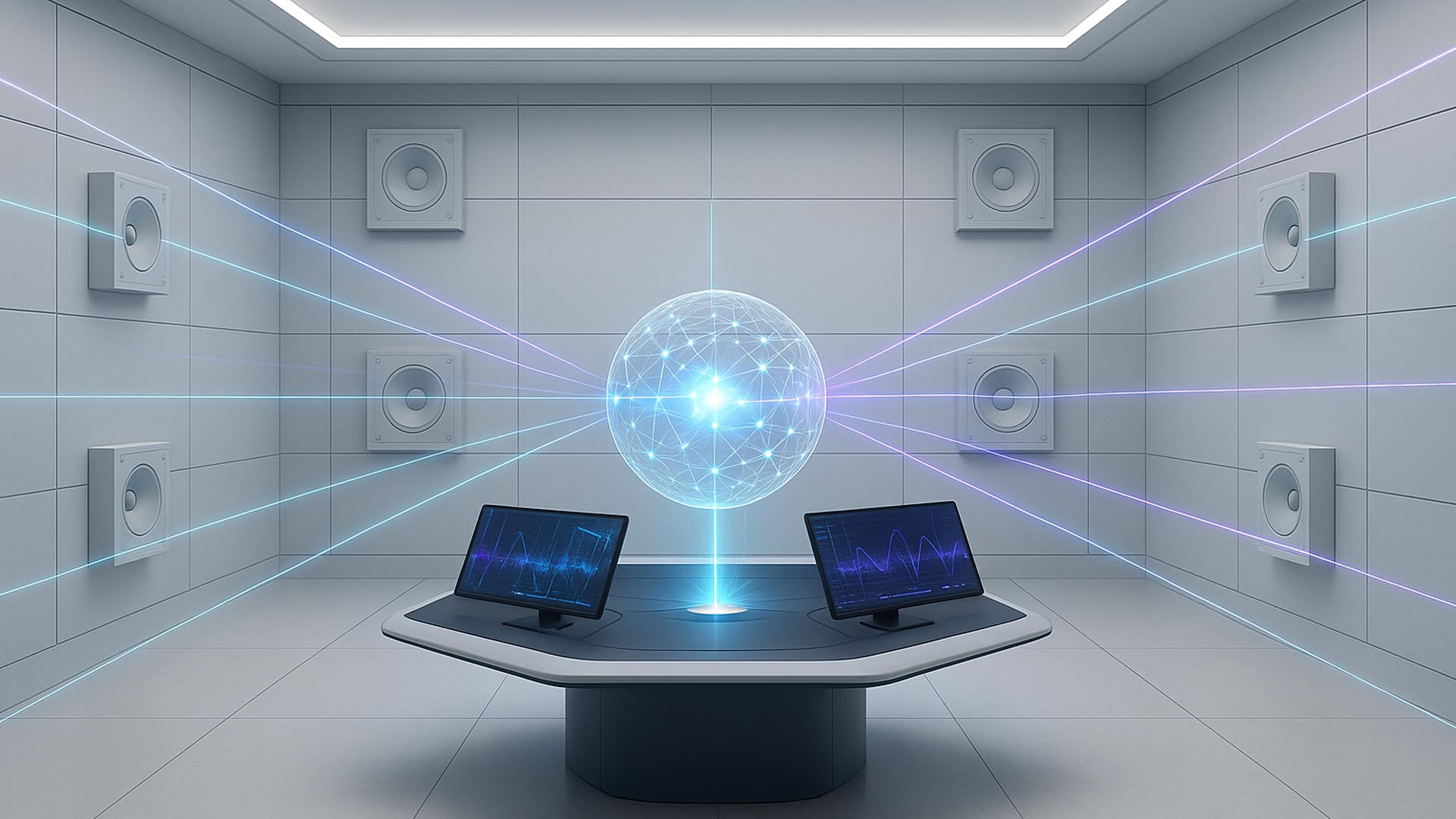
Image: Acoustic simulation of a dynamic sound source in the lab | © Ulrich Buckenlei | Visoric GmbH 2025
Sound thus becomes a precise design tool. In combination with light, motion, and digital models, it enables an entirely new perception of space and information – visually and acoustically coherent.
Immersive Design – Sound as an Interface
Where screens overwhelm, sound opens new paths. Spatial Audio can spatially position information, enhance emotions, and provide orientation without demanding visual attention.
In immersive work environments, such as manufacturing or training, sound increasingly replaces traditional displays and warning signals. The ear takes on tasks that once required the eyes.
AR systems with directional audio set targeted acoustic markers. When a machine requires attention, a signal sounds precisely from the direction where the issue is located. The brain automatically recognizes the source – the hand and decision follow intuitively. This saves time, reduces errors, and increases safety.
- Acoustic signals as precise orientation aids
- Sound design for safety and ergonomics
- Adaptive 3D sound for XR and training systems
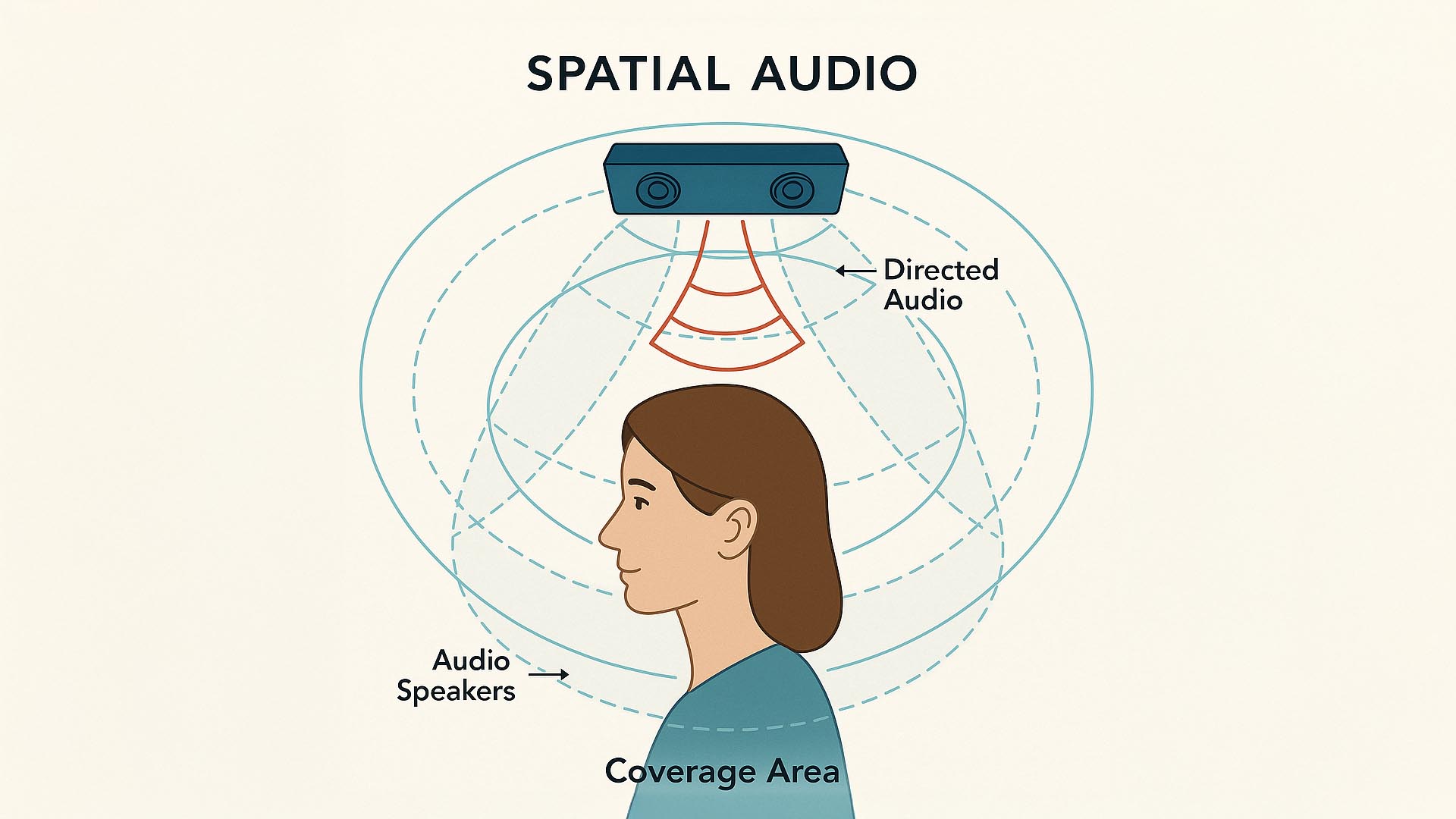
Image: Spatial sound as a natural interface in immersive work environments | © Ulrich Buckenlei | Visoric GmbH 2025
Listening becomes interaction. Where sound and space merge, an intuitive user experience emerges that leverages natural perception instead of overwhelming it.
Real-Time Synchronization
A key factor for the quality of spatial perception is **synchronization**. Only when there is no perceptible delay between action and reaction does the brain perceive the experience as “real.”
Research shows that systems optimally coupling rendering, sensors, and data access significantly increase trust in digital environments. In this harmony lies the key to immersive credibility.

Diagram: Reaction Time vs. Data Latency | Source: Visoric Research 2025
The diagram shows that when real-time rendering, tracking, and data paths are optimally aligned, perceived latency drops almost to zero.
This precision is crucial in industrial contexts – for example, in robotics control, teleoperation, or safety-critical environments where acoustic feedback must be accurate to the millisecond.
How Directed Sound Works in Space
To ensure that sound in open space reaches only specific individuals, Spatial Audio uses a combination of sensors, data analysis, and artificial intelligence. The system detects each listener’s position and movement, steering sound waves so precisely that they are audible only at a defined point – without others in the room perceiving the sound.
- Real-time sensing: Microphones and motion sensors capture the position, direction, and distance of listeners.
- AI Audio Core: An AI calculates within milliseconds how sound waves must be shaped and directed to project sound precisely to the target point.
- Sound zones: Multiple sound zones enable different people to hear different content simultaneously – each within their own acoustic space.
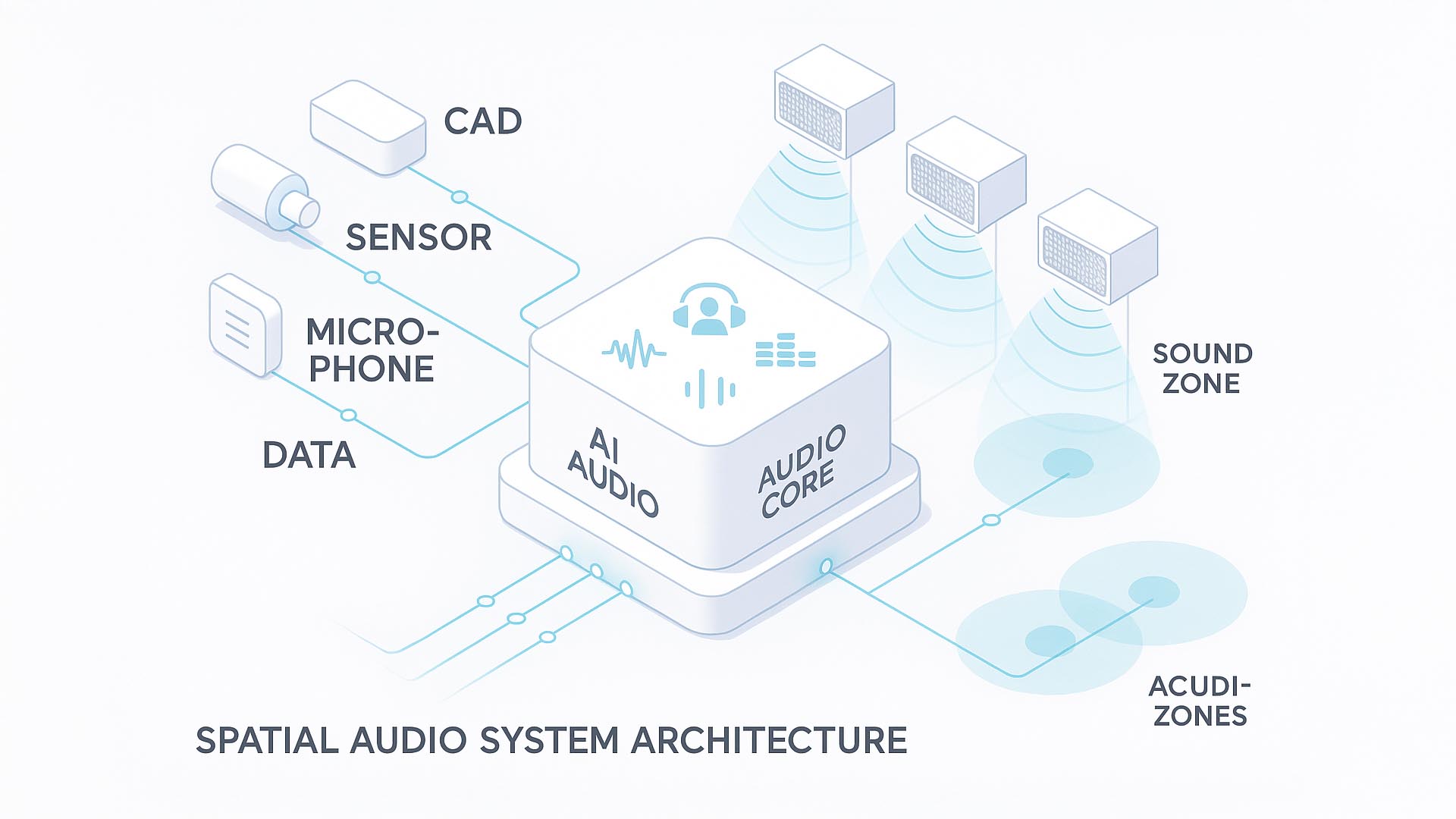
Image: Spatial Audio System Architecture | © Ulrich Buckenlei | Visoric GmbH 2025
This architecture forms the technical foundation for a completely new audio experience. Instead of simply adjusting volume, the system shapes sound precisely in space. The AI Audio Core synchronizes all sensors and speaker modules in real time, creating an acoustic network that dynamically adapts to movement and interaction.
Whether in vehicles, exhibitions, or industrial control centers – the ability to create targeted sound zones opens new possibilities for personalized communication and interaction. Spatial Audio transforms sound into a spatial medium that people intuitively understand – making the invisible world of data audible.
Audiological Perception – When Physics Becomes Emotion
Sound is more than information – it is emotion. Spatial Audio uses physical parameters such as timing, phase, and reflection to provide the brain with a realistic acoustic image. When a sound “feels right,” it automatically enhances trust and focus.
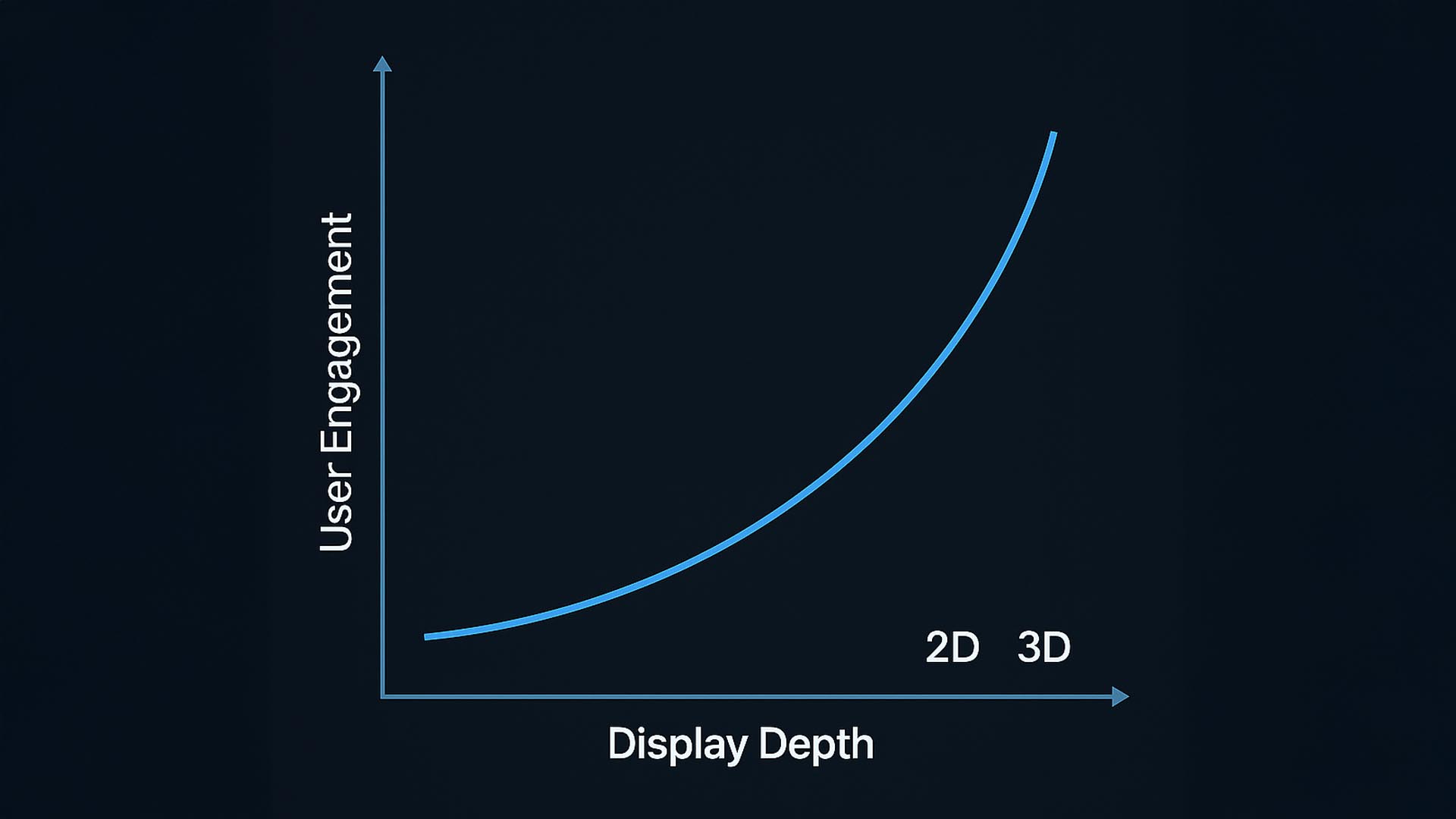
Diagram: User Engagement vs. Acoustic Depth | Source: Visoric Research 2025
The more physically tangible the sound field becomes, the deeper the information embeds in consciousness. Studies show that immersive spatial sound can improve learning and memory performance by up to 25 percent. For industrial training or collaborative simulations, this means fewer errors, greater understanding, and faster decision-making.
Industrial Metaverse & Cross-Industry Impact
The principles of Spatial Audio can be applied across industries. The same technology that creates an immersive listening experience in vehicles connects people, machines, and processes through acoustic data spaces in industry.
OEMs and suppliers develop shared 3D models that can be “heard” – processes become perceptible through sound frequencies, material resonances, and real-time data.
- Shared 3D platforms between OEMs and suppliers
- Transfer from automotive to Industry 4.0
- The future is not built – it is simulated

Image: 3D simulation networks in the Industrial Metaverse | © Ulrich Buckenlei | Visoric GmbH 2025
What began in the automotive sector is evolving into a cross-industry standard. When all participants can hear and understand the same space, a new form of collaboration emerges – precise, empathetic, and efficient.
Experience What You Hear – The Concept in Action
The accompanying video shows how acoustic and visual layers merge within a vehicle interface. Functions are not only seen but heard – every movement and every signal has direction and depth.
Interaction becomes more immediate, emotional, and precise: the user hears what they do.
Video: Ulrich Buckenlei | 3D Animation Jared Owen
The video makes it clear that sound is no longer decoration – it becomes an integral part of human-machine communication.
Shaping the Future – Creating Space for Sound Intelligence with Experts
The Munich-based Visoric team develops solutions that connect physical and digital worlds through sound. It’s not about volume but meaning. Spatial Audio exemplifies the ambition to make technology tangible, understandable, and emotionally accessible.
- Consulting, development, and integration of Spatial Audio systems
- Simulation and testing of real acoustic models in virtual environments
- Custom solutions for automotive, industrial, and XR applications
Together, we create spaces that are not only visible but audibly intelligent – where sound forms the bridge between humans, machines, and digital experience.
Contact Us:
Email: info@xrstager.com
Phone: +49 89 21552678
Contact Persons:
Ulrich Buckenlei (Creative Director)
Mobil +49 152 53532871
Mail: ulrich.buckenlei@xrstager.com
Nataliya Daniltseva (Projekt Manager)
Mobil + 49 176 72805705
Mail: nataliya.daniltseva@xrstager.com
Address:
VISORIC GmbH
Bayerstraße 13
D-80335 Munich