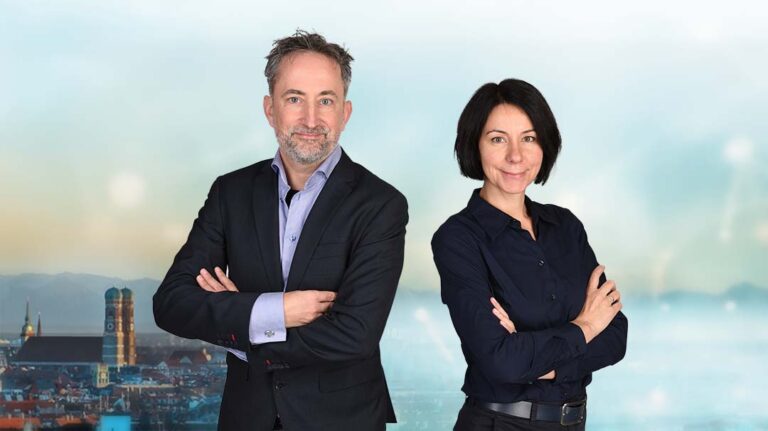
AI, 3D and immersive technologies in real-world applications – Insights from Laval Virtual 2026
Visual: Laval Virtual 2026 in Laval | Image: © Ulrich Buckenlei
Why AI, 3D and immersive technologies are now making the leap into real business applications
Laval Virtual 2026 reveals a clear shift. Technologies that were long considered experimental are reaching a new level of maturity. Applications from the fields of artificial intelligence, 3D and immersive systems are no longer just demonstrated, but are being deployed under real conditions.
What becomes visible is less a single innovation and more a structural transformation. Systems are converging, data is processed in real time, and interaction is evolving from visual representation toward functional control.
For companies, this creates a new starting point. The question is no longer whether these technologies are relevant, but how they can be meaningfully integrated. This is exactly where the real leverage for competitive advantage lies.
From demonstrator to real application
For many years, immersive technologies were primarily used as showcases. Applications served to visualize possibilities and demonstrate new forms of interaction. This phase was important because it established technological foundations. At the same time, it was characterized by isolated solutions that were rarely integrated into operational processes.
At Laval Virtual 2026, a clear transition becomes visible. Applications are increasingly tested and deployed under real conditions. Systems must function reliably, support processes and deliver measurable value. This requirement fundamentally changes how these technologies are evaluated.
The focus is shifting from visual quality to operational robustness. Systems must work synchronously, process data reliably and be integrable into existing structures. This creates a new generation of applications that are no longer designed as experiments, but as tools.
This development can be summarized in three key points:
- Immersive systems are used operationally
- Stability and integration come into focus
- Technology is measured against real processes

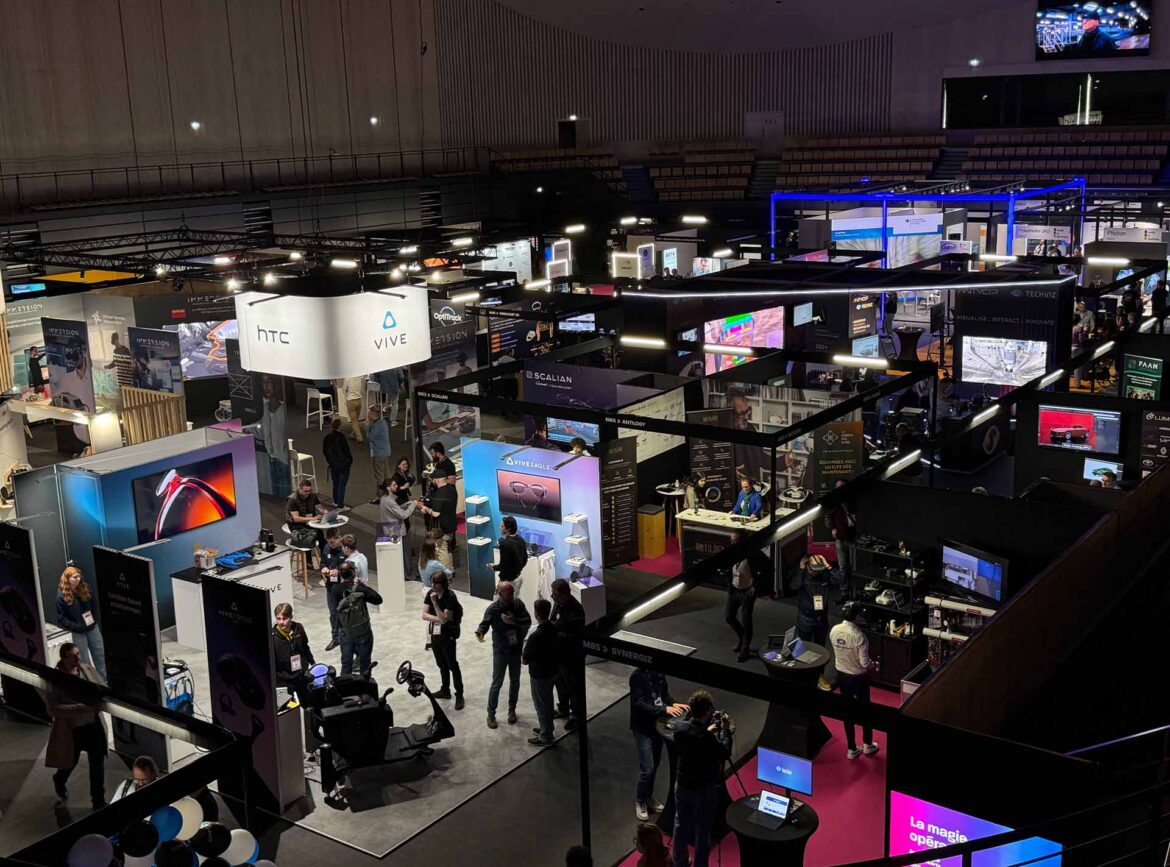
Laval Virtual demonstrates the transition from demonstrations to real applications
Visual: Laval Virtual 2026 | Image: © Ulrich Buckenlei
This also changes expectations. Companies are no longer looking for inspiration, but for solutions that can be concretely applied. This is where the next phase of technological development begins.
AI as the structuring layer of systems
A central driver of this development is artificial intelligence. While AI has long been used mainly for analysis and automation, it is increasingly taking on a structuring role within complex systems.
At Laval Virtual, it becomes clear that AI does not operate in isolation. It connects data, processes and interactions into a coherent architecture. Systems react adaptively, content is dynamically adjusted and processes can be optimized in real time.
This capability fundamentally changes how technology is used. Applications are no longer developed as static systems, but continuously evolve. Systems learn from data and adapt to new conditions.
Three developments are particularly relevant:
- AI structures complex data spaces
- Systems respond adaptively to change
- Processes are dynamically optimized
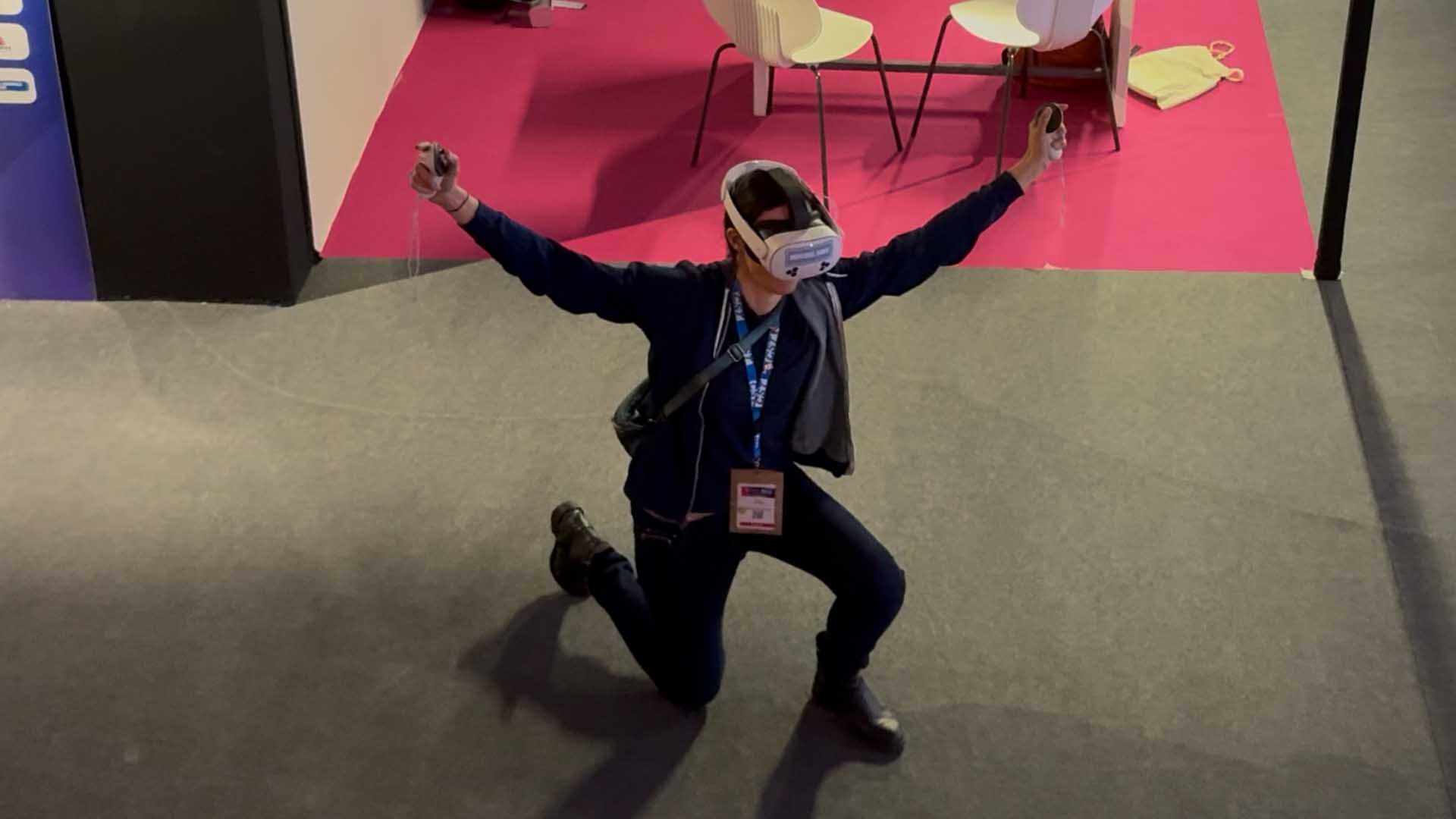
Artificial intelligence connects data, processes and interaction
Visual: Laval Virtual 2026 | Image: © Ulrich Buckenlei
For companies, this creates a clear advantage. Systems become more flexible, more efficient and easier to scale. At the same time, complexity in usage decreases, as AI organizes many processes in the background.
3D becomes the foundation of new data spaces
Another central aspect is the role of 3D technologies. While 3D has long been used primarily for visualization, it is increasingly evolving into the structural foundation of digital systems.
3D becomes the interface for complex information. Data can be represented spatially, processes become visible and relationships can be understood more intuitively. This creates enormous value, especially in industrial contexts.
At Laval Virtual, it becomes clear that 3D cannot be considered in isolation. It is closely connected with data, simulation and interaction. Only in this combination does a truly usable system emerge.
This development can be clearly summarized:
- 3D becomes the interface for complex data
- Simulation enables better decisions
- Relationships become intuitively understandable

3D technologies make complex processes visible and understandable
Visual: Laval Virtual 2026 | Image: © Ulrich Buckenlei
For companies, this opens up new possibilities. Decisions can be better prepared, processes can be simulated and risks can be identified at an early stage.
Real-time systems as a prerequisite for operational use
A decisive factor for operational deployment is the real-time capability of systems. Only when data, interaction and processing run synchronously can stable applications emerge.
At Laval Virtual, it becomes clear that this is where the greatest challenge lies. Systems must be precisely aligned to function under real conditions. Delays, inconsistencies or instabilities directly lead to barriers in usage.
At the same time, it is evident that this challenge is increasingly being solved. Technologies are evolving toward synchronous, stable systems that operate reliably.
The key developments are:
- Data is processed in real time
- Systems operate synchronously and stably
- Applications become reliable in operation

Real-time capability becomes the foundation of operational applications
Visual: Laval Virtual 2026 | Image: © Ulrich Buckenlei
This creates a decisive difference. Technology is no longer just shown, but works under real conditions.
New opportunities for companies
Laval Virtual 2026 clearly demonstrates the potential for companies. Technologies are no longer viewed in isolation, but used as integrated systems.
This creates new opportunities across different areas. Processes can be made more efficient, decisions can be better prepared and complex relationships can be made more understandable.
Particularly relevant are:
- Better decision-making through simulation
- Efficiency gains through automation
- New forms of interaction with data

Laval Virtual demonstrates concrete application areas for companies
Visual: Laval Virtual 2026 | Image: © Ulrich Buckenlei
For companies, this results in a clear task. It is no longer about technology itself, but about the ability to integrate it meaningfully and make it usable.
Video analysis – technologies in operational use
The following video shows current developments in the context of Laval Virtual. It illustrates how technologies interact and what forms of integrated applications emerge from them.
Analysis of current developments around AI, 3D and immersive technologies
The key insight lies in integration. Only the interaction of systems enables stable applications. This is exactly where the difference between demonstration and real deployment lies.
Integrating technologies into companies with purpose
Laval Virtual 2026 shows that technologies are ready. The next step is implementation. Companies face the task of integrating these systems meaningfully and creating real value from them
.
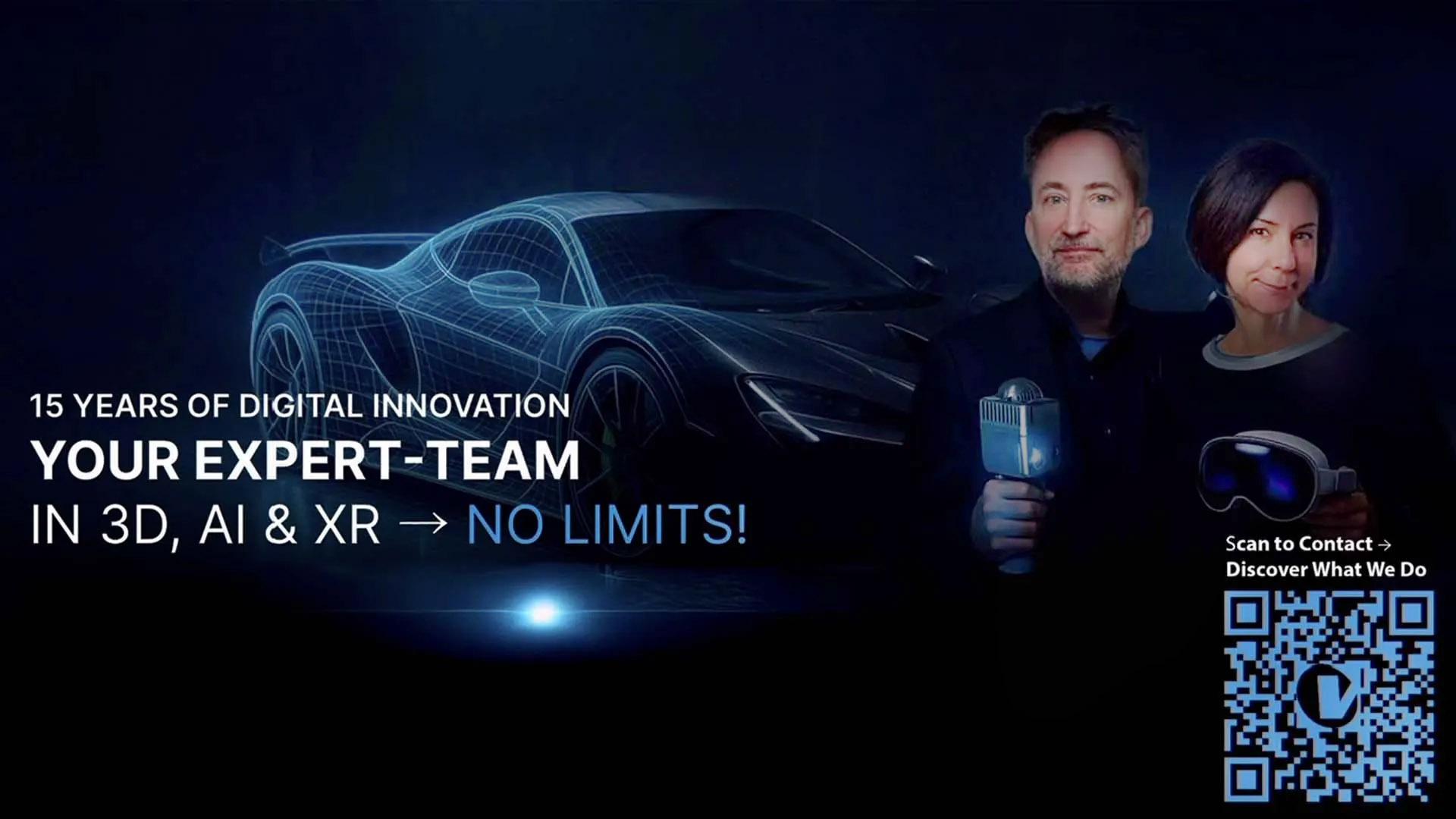
XR system design in practice – analysis, architecture and implementation as an integrated development process
Source: VISORIC GmbH | Munich
- Strategy development → Classifying technologies meaningfully
- Process integration → Using applications operationally
- Proof of Concept → Validating solutions quickly
- System architecture → Creating stable structures
- Scaling → Expanding solutions
VISORIC develops concrete applications together with companies, transferring AI, 3D and immersive technologies into real processes.
If you want to understand how these technologies can be applied in your company, it is worth looking at your existing processes and data.
The key question is no longer whether these technologies are coming.
But how consciously they are used.
Contact Us:
Email: info@xrstager.com
Phone: +49 89 21552678
Contact Persons:
Ulrich Buckenlei (Creative Director)
Mobil +49 152 53532871
Mail: ulrich.buckenlei@xrstager.com
Nataliya Daniltseva (Projekt Manager)
Mobil + 49 176 72805705
Mail: nataliya.daniltseva@xrstager.com
Address:
VISORIC GmbH
Bayerstraße 13
D-80335 Munich