
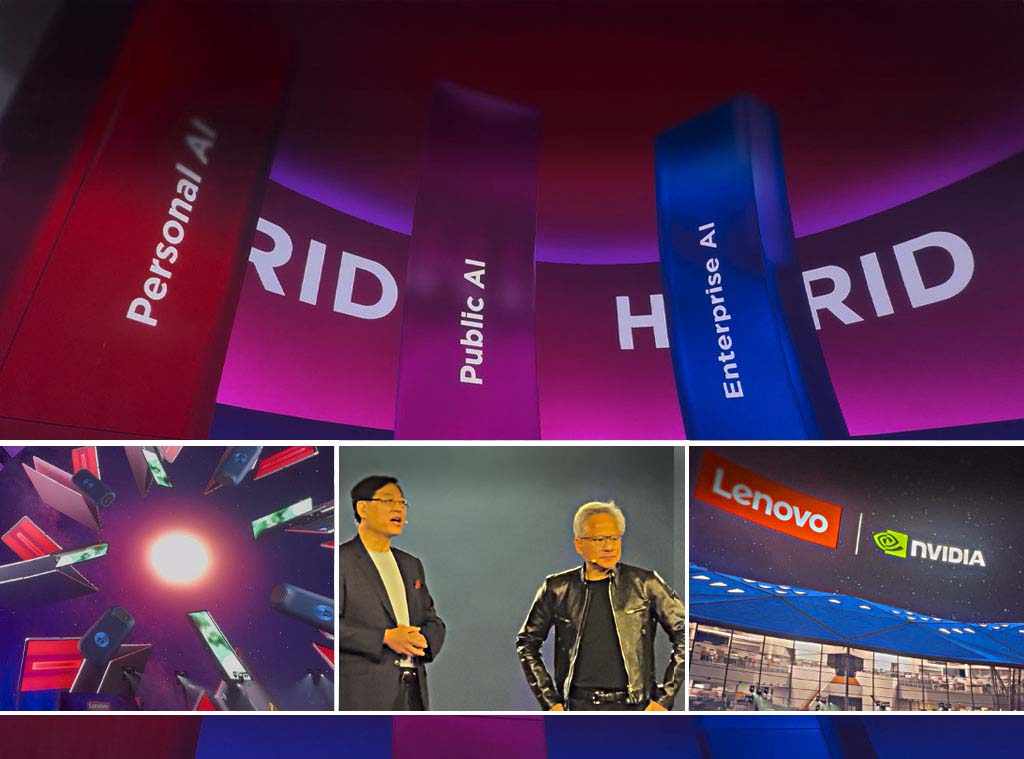
Lenovo and NVIDIA at CES 2026 on the Next Industrial Stage of Artificial Intelligence
Image: © Ulrich Buckenlei | CES 2026 | Las Vegas
CES 2026 made it clear that Artificial Intelligence is increasingly understood as industrial infrastructure. At the Sphere in Las Vegas, the Lenovo keynote with NVIDIA showed how AI is evolving from generative models toward agentic systems and AI factories, setting new economic benchmarks in the process.
From AI Tool to Industrial Base Layer
What emerged at CES 2026 goes beyond classic technology cycles. Artificial Intelligence is no longer primarily conceived as a tool or application, but as a foundational technical layer on which future systems, processes, and business models will be built.
At the Sphere in Las Vegas, the Lenovo keynote with NVIDIA made it clear that the focus is shifting away from individual models toward operational structures. What matters is no longer just what AI can do, but how it is operated, scaled, and made reliably available over time. AI is increasingly appearing as infrastructure, not as an isolated feature.
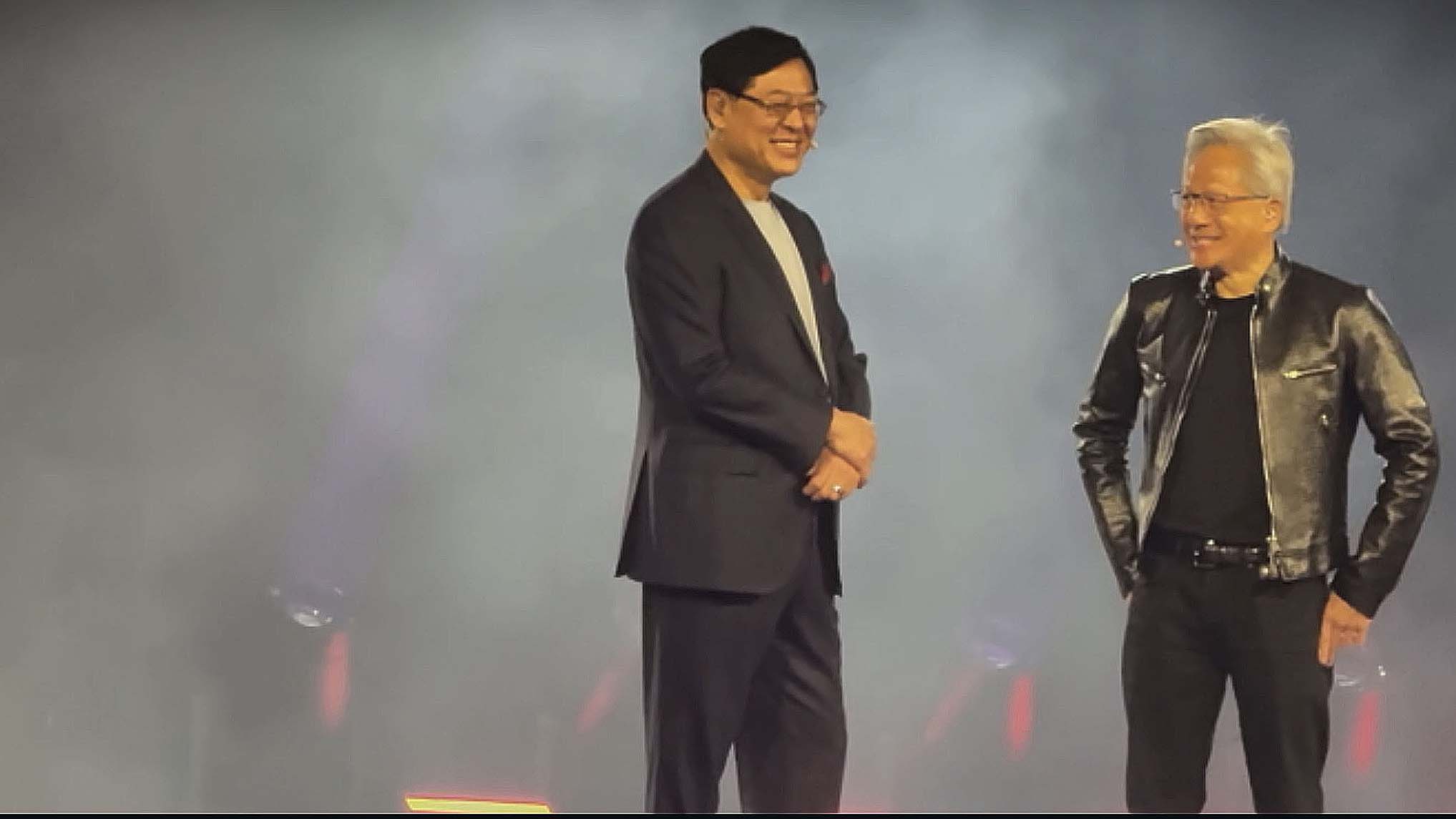
Jensen Huang and Yang Yuanqing on stage at the Sphere in Las Vegas during the Lenovo keynote at CES 2026
Image: © Ulrich Buckenlei | CES 2026 | Las Vegas
The moment carried a clear signal effect. The central message was not acceleration at any cost, but structural anchoring. Companies must treat AI as strategically as cloud infrastructure, energy supply, or industrial manufacturing. Only through stable operation and scale does intelligence unfold its economic value.
- AI as a base layer → The focus shifts from applications to systems
- Operation over experimentation → Value emerges through availability and reliability
- Industrial logic → Scaling and stability become core requirements
This perspective forms the foundation for the next chapter. Once AI is understood not as a tool but as an operational layer, its technological logic also changes. Systems come to the forefront that plan, act, and operate effectively in complex environments.
AI Factories as a New Industrial Category
Perhaps the most consequential concept in this discussion was the idea of AI factories. These are not traditional data centers, but industrial systems designed to produce intelligence at scale. The comparison with factories is not metaphorical, but structural. It is about throughput, efficiency, operational reliability, and rapid usability.
Huang positioned this development along clear platform generations. Hopper marked the entry into the new category, Grace Blackwell accelerated industrialization, and Rubin represents the next performance leap. These advances follow a logic unfamiliar from classic IT. What matters is not only higher performance, but a dramatically improved cost structure per output.

Lenovo and NVIDIA present the AI Cloud Gigafactory as scalable infrastructure for AI factories
Image: © Ulrich Buckenlei | CES 2026 | Las Vegas
Within this logic, a new KPI becomes dominant. Not just compute power, but time to first token and the ability to bring systems into production quickly. Those who deliver intelligence faster gain time, learning speed, and economic impact. This is precisely why companies will not only select models in the future, but also build production capacity for AI.
- New infrastructure class → AI factories produce intelligence like industrial systems
- Generational leaps → Hopper, Grace Blackwell, and Rubin accelerate the cycle
- Time to first token → Speed becomes an economic metric
With this, the technological foundation is set. In the next chapter, the focus shifts to the economic consequences. Speed and scale become not just technical goals, but direct competitive advantages.
Speed Becomes the Most Important Metric
Once AI is understood as operational infrastructure, the logic of measurement changes. What matters is no longer only how powerful a model is, but how quickly a system delivers usable results in practice. This is where a new economic center emerges. Speed becomes the lever for value creation.
In the Lenovo keynote with NVIDIA, this logic became tangible through the metric time to first token. It describes the moment when a system is not only installed, but productive. Those who reach this point earlier can iterate sooner, integrate sooner, and monetize sooner. In the AI economy, this is a structural advantage, because learning curves steepen and decisions flow back into operational processes more quickly.
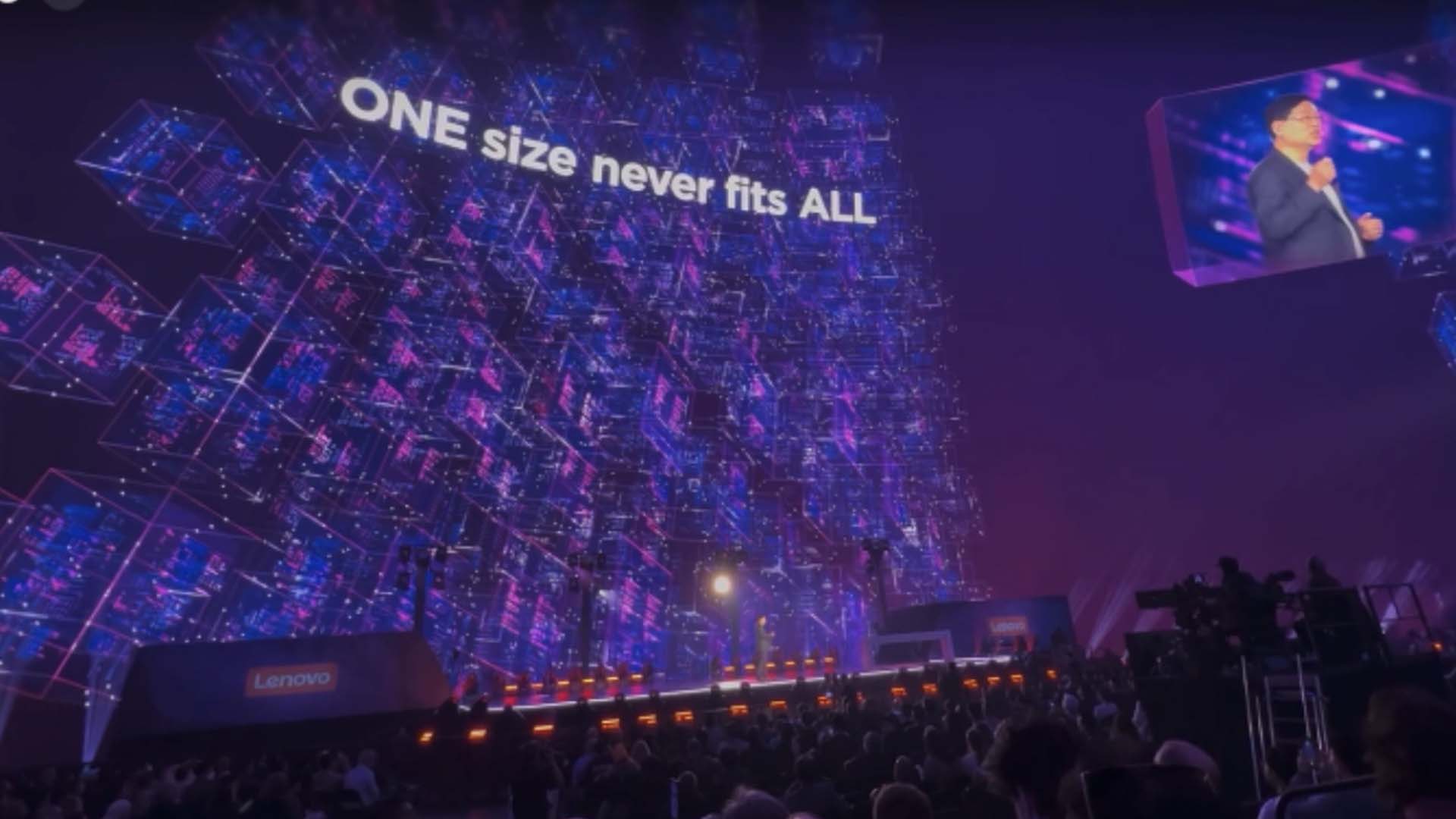
“One size never fits all” as a guiding principle of the Lenovo keynote at CES 2026: AI becomes infrastructure that must be adapted to specific tasks and organizations
Image: © Ulrich Buckenlei | CES 2026 | Las Vegas
The statement captures the core of a new reality. AI systems must be tailored to different processes, data spaces, and risk profiles. Deployment therefore becomes a strategic discipline. Speed is not just a performance metric, but an organizational principle. Those who become productive quickly gain not only time, but also trust in the systems, because results can be validated earlier in real environments.
- Time to first token → Productivity matters more than pure benchmark performance
- Fast iteration → Value emerges when AI is integrated early into real processes
- Competitive advantage → Speed accelerates learning, adoption, and monetization
This logic leads directly to the next question. If speed becomes the key metric, systems are needed that are not only powerful, but reliably industrializable. This is where the focus shifts to what Lenovo brings into the partnership.
Why Lenovo Becomes an Industrial Enabler of AI
In many debates around AI, models, chips, and software stacks dominate. The conversation at the Sphere showed that another factor is becoming decisive: industrial execution capability. AI factories are complex systems composed of compute, networking, power, cooling, and operations. Scaling them requires not only technology, but also manufacturing, integration, and global service capability.
Lenovo occupies a strategic position precisely at this point. The ability to build, test, install, and operate highly complex systems at scale becomes a decisive competitive advantage. This shifts perception. Lenovo is not just a hardware provider, but a partner that productizes infrastructure and makes it available as a repeatable system.
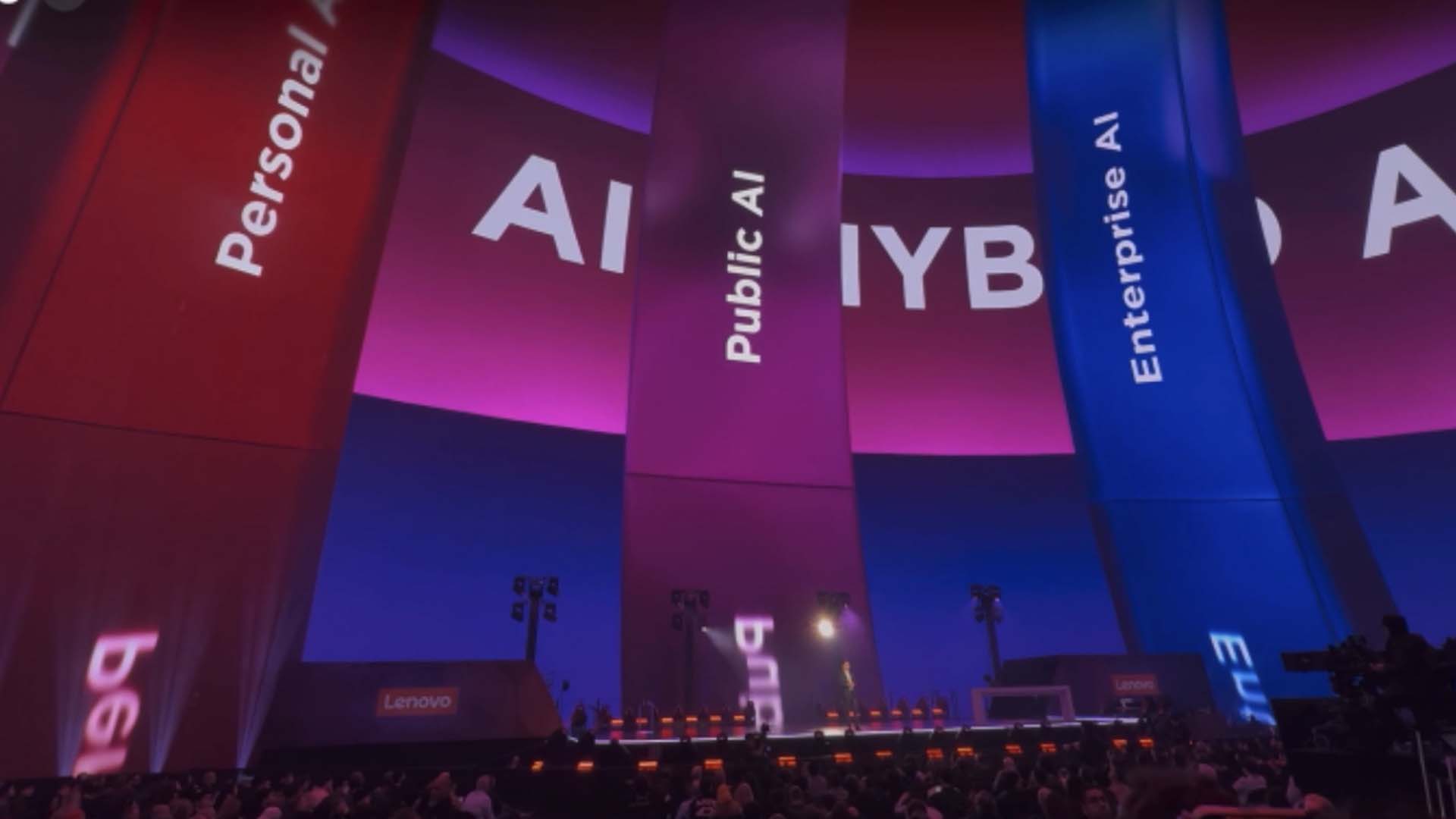
Hybrid AI as an architectural principle: Personal AI, Public AI, and Enterprise AI as the foundation of scalable AI systems in companies
Image: © Ulrich Buckenlei | CES 2026 | Las Vegas
The hybrid AI perspective underscores the need for differentiation. Companies require systems that work with internal data, understand processes, and remain combinable with public models. This demands infrastructure that is not built once, but standardized, extended, and operated globally. In this context, topics such as liquid cooling, power density, and serviceability gain new importance, because they determine real scalability.
- Industrial execution → Scaling succeeds through manufacturing, integration, and operations
- Hybrid AI demand → Enterprise AI requires flexible architectures and governance
- Scaling through operations → Cooling, power, and service become strategic factors
This makes clear why the partnership does not appear as a classic collaboration. It is a co creation between compute architecture and industrial execution. In the next chapter, it becomes evident why such alliances will define the future of AI markets.
Why Partnerships Will Shape the Next AI Decade
The stage at the Sphere made it clear that the next phase of AI will not be dominated by individual companies alone. AI factories are too complex, too capital intensive, and too operationally critical to be conceived as isolated products. The new category emerges where compute architecture, system design, cooling, manufacturing, and services are brought together in integrated execution.
In this sense, the alliance between NVIDIA and Lenovo is more than technical alignment. It acts as a blueprint for a new infrastructure market. NVIDIA delivers the platform logic for accelerated computing and the next chip generation, while Lenovo brings the ability to build, install, and operate these systems at scale worldwide. This combination shifts value creation. The market moves from components to productized systems that are rapidly deployable.
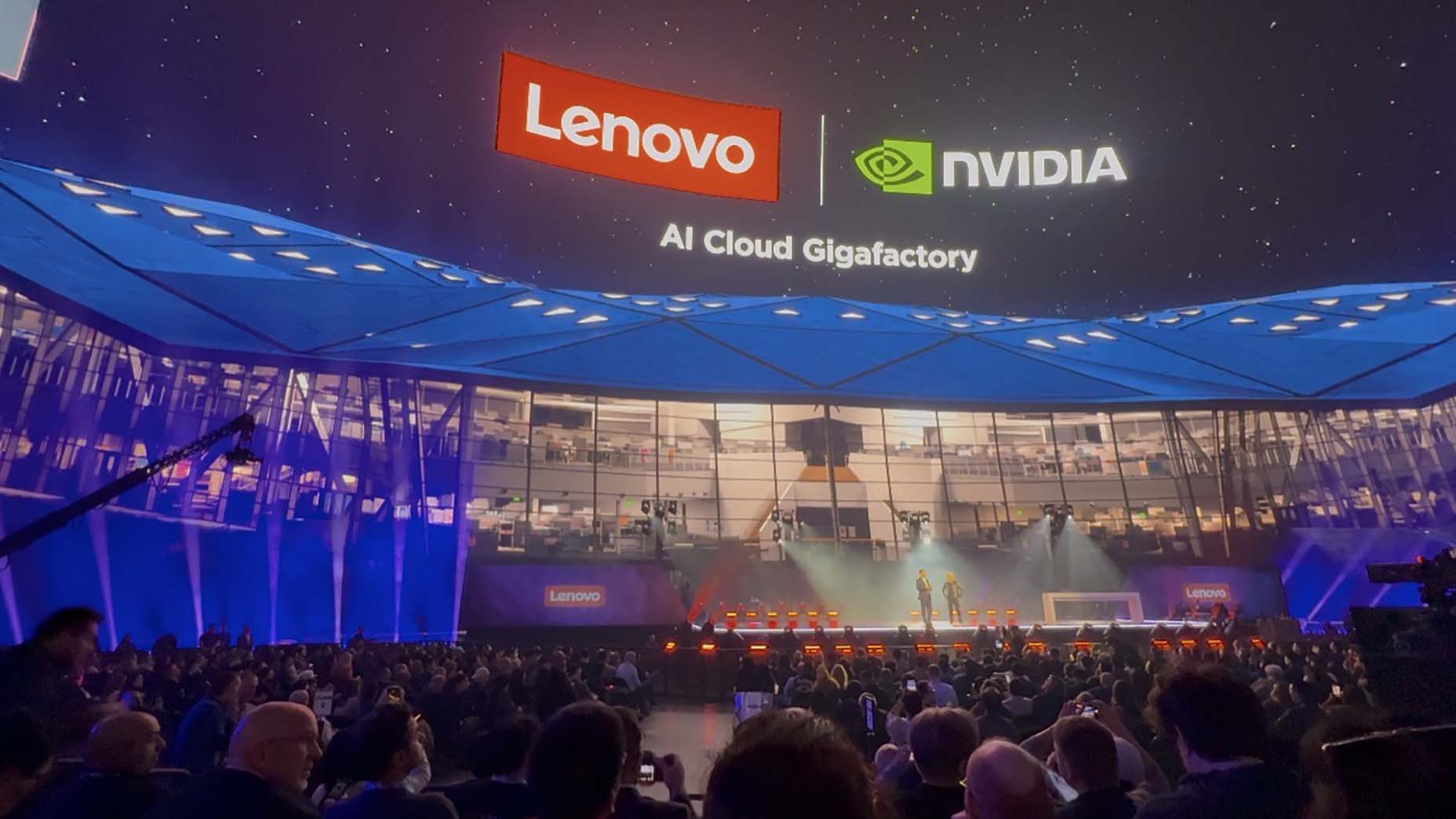
The Lenovo NVIDIA AI Cloud Gigafactory as a signal of the transition from components to productized AI factory systems
Image: © Ulrich Buckenlei | CES 2026 | Las Vegas
The economic core lies in controlling the AI supply chain. Those who can deliver systems that make companies productive quickly gain not only revenue, but also influence over standards, platforms, and operating models. In this logic, it becomes clear why AI infrastructure will be treated like an industrial asset in the future. Comparable to factories or power plants, it determines output and competitiveness.
- Co creation over cooperation → Infrastructure emerges through integrated execution
- Systems beat components → Productization becomes the scaling lever
- AI supply chain → Those who deliver infrastructure gain standards and market power
This makes the strategic dimension visible. In the next chapter, this leads to a clear conclusion for companies. What decisions must be made now when AI becomes industrial infrastructure and inference becomes the dominant factor in cost and performance?
Video: AI as an Industrial Reality at the Sphere
The following video condenses the central impressions of the Lenovo keynote with NVIDIA at the Sphere in Las Vegas during CES 2026. It does not focus on individual product details, but conveys atmosphere, scale, and strategic direction. This visual condensation makes visible how Artificial Intelligence was positioned as industrial infrastructure.
Instead of classic feature demonstrations, the staging placed scale, compute power, and system thinking at the center. The Sphere stage was not used to explain technology, but to situate it spatially and economically. AI was not presented as an abstract concept, but as an operational foundation for industrial applications.
The Lenovo keynote with NVIDIA at the Sphere at CES 2026: AI becomes spatially and visually tangible as industrial infrastructure.
Video: © Ulrich Buckenlei | CES 2026 | Las Vegas
Even though the video primarily conveys impressions, it points to key themes that played a central role in the conversation between Lenovo and NVIDIA. The spatial staging, presence on stage, and tone of the appearance reflect the strategic priorities that were discussed in depth and are decisive for interpreting the moment.
- Staging of infrastructure → AI is experienced as a system, not a feature
- Spatial scaling → The Sphere makes industrial dimension visually understandable
- Impact over explanation → Acceptance emerges through context, not details
These points capture what this moment was really about. Not details or announcements, but the understanding of AI as a system, its spatial dimension, and its strategic positioning. This is precisely what makes industrial AI tangible.
The Visoric Expert Team in Munich
The insights from CES 2026 show that Artificial Intelligence is entering a new phase. Moving away from isolated applications toward industrial systems that reliably produce, operate, and scale intelligence. This is exactly where the Visoric expert team positions itself with analytical and technological expertise.
Visoric supports companies in viewing AI not as a software project, but as strategic infrastructure. The focus is on questions of scaling, inference, operational reliability, and economic effectiveness. The goal is to design complex AI systems in a way that makes them productively usable and creates long term value.
- Strategic framing → AI infrastructure, agentic systems, inference, and scaling
- Concept & design → Industrial AI architectures, real time and XR systems
- Implementation & operations → Platforms, workflows, and productive AI factories

The Visoric expert team: Ulrich Buckenlei & Nataliya Daniltseva
Source: Visoric GmbH | Munich
If you are exploring how AI can be built, operated, and strategically leveraged as industrial infrastructure, the Visoric expert team supports you in analysis, concept, and implementation with depth, practical relevance, and a focus on real industrial requirements.
Contact Us:
Email: info@xrstager.com
Phone: +49 89 21552678
Contact Persons:
Ulrich Buckenlei (Creative Director)
Mobil +49 152 53532871
Mail: ulrich.buckenlei@xrstager.com
Nataliya Daniltseva (Projekt Manager)
Mobil + 49 176 72805705
Mail: nataliya.daniltseva@xrstager.com
Address:
VISORIC GmbH
Bayerstraße 13
D-80335 Munich