
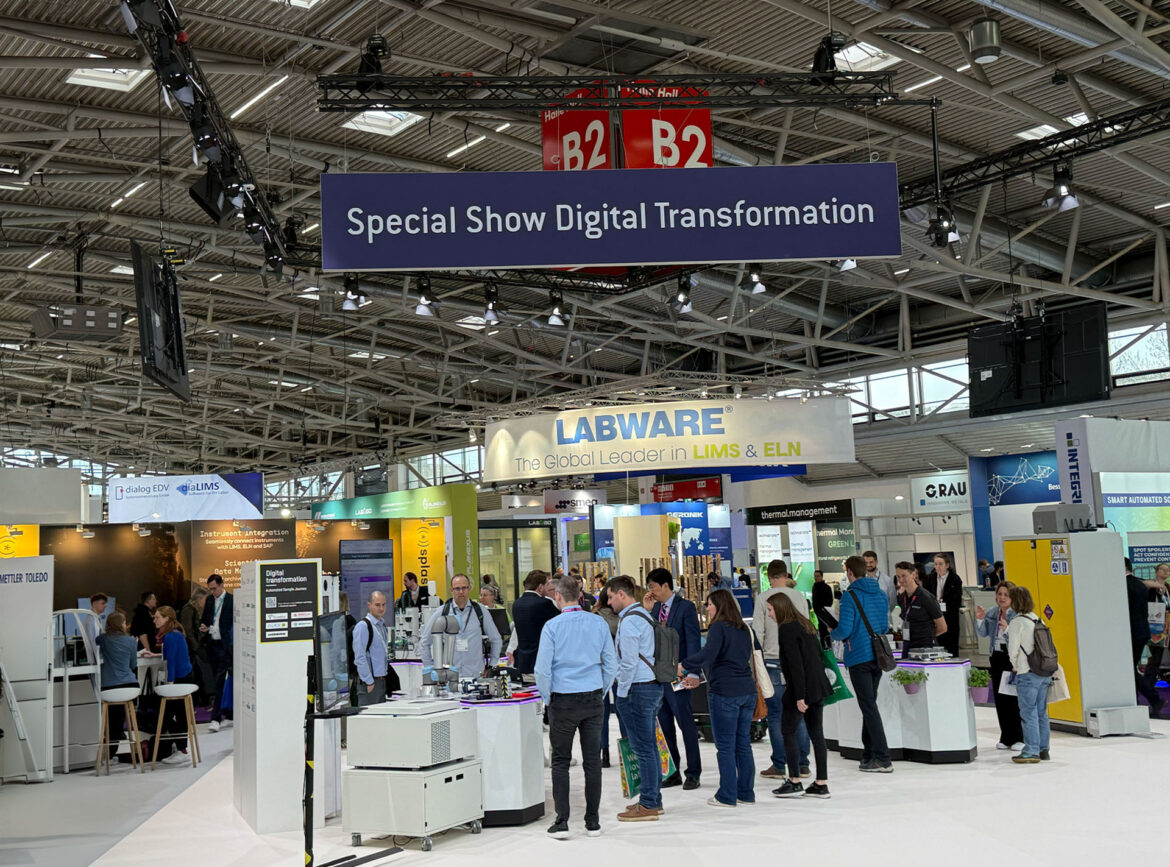
Analytica 2026. Digital transformation in the laboratory becomes operational reality
Motif: Special Show “Digital Transformation” in Hall B2 at Analytica 2026 | Image: © Ulrich Buckenlei
Analytica 2026 in Munich makes visible something that has been evolving behind the scenes for a long time. Laboratories are no longer just facing digital transformation, they are already right in the middle of it. In Hall B2, it becomes clear how individual technologies are evolving into a connected system in which data, automation and decision logic seamlessly interact.
What once began as the digitization of individual processes is now transforming the entire way of working. Systems react in real time, processes become data-driven and automation evolves from pure efficiency to true intelligence. The laboratory thus becomes a dynamic system that not only analyzes, but actively co-steers.
For chemistry, life sciences, pharmaceuticals and industrial analytics, this marks a clear turning point. Competitiveness emerges where data becomes instantly usable and processes are intelligently orchestrated. Analytica 2026 shows that the laboratory of the future is not only digital. It is connected, adaptive and operationally effective.
From digital tool to intelligent laboratory system
For many years, digitalization in the laboratory was understood as a supportive extension. Devices were better integrated via software, data was documented more precisely and individual process steps could be automated or made more traceable. This development was important and still forms the foundation of modern laboratory work. At the same time, Analytica 2026 makes it clear that this phase is no longer sufficient to meet the increasing demands for speed, scalability and precision.
The real transformation begins where digital systems no longer exist side by side, but are conceived as a continuous architecture. In Hall B2, exhibitors demonstrate exactly this development. Instruments, interfaces, platforms and data spaces are merging into a connected system in which information no longer ends at system boundaries. The laboratory itself becomes an intelligent unit that not only executes, but understands states, coordinates processes and feeds results directly back into operational workflows.
This transition is crucial. A digital tool supports humans. An intelligent laboratory system organizes the process. It recognizes correlations, reduces friction and creates continuity between data acquisition, analysis, evaluation and action. This goes beyond traditional digitalization. It is the foundation for a new laboratory logic in which systems are not only functionally, but structurally interconnected.
This development is reflected in three key changes:
- Laboratory systems become fully connected and data-driven
- Processes increasingly run in an automated and adaptive way
- Decisions are generated directly within the systems
The focus is shifting from individual applications to holistic system architectures. What matters is no longer whether a device is digitally connected, but whether the overall system can intelligently process information and generate immediate value from it. This is where the next stage of the laboratory emerges.

The Special Show “Digital Transformation” in Hall B2 demonstrates how connected systems are turning the laboratory into an intelligent infrastructure
Motif: Special Show “Digital Transformation” in Hall B2 at Analytica 2026 | Image: © Ulrich Buckenlei
The solutions presented make it clear that digitalization in the laboratory can no longer be understood as a collection of individual software functions. Systems interconnect, data is continuously processed and workflows begin to align with real-time conditions. This creates a new form of operational intelligence.
This development is not only technologically relevant, but also economically significant. The better systems are integrated, the fewer media disruptions, manual transfers and unnecessary sources of error occur. At the same time, the speed at which new insights can be translated into concrete action increases. The laboratory becomes more robust, more efficient and significantly more valuable from a strategic perspective.
From laboratory to automated process landscape
A central theme of Analytica 2026 is the growing automation of complete laboratory workflows. This is no longer just about individual robotic support steps or standardized routines. Rather, it becomes clear how entire process chains are being transformed into a new, automated structure. Robotics, sensors, intelligent sample handling and software platforms interconnect and create a process landscape that operates far more smoothly and reliably than traditional, manually driven environments.
This development is particularly critical in laboratories with high sample throughput, strict quality requirements or time-critical analysis chains. Automation not only reduces effort, but also increases consistency and traceability. What used to be fragmented across individual instruments and steps is now modeled as a continuous workflow. The laboratory environment begins to function like an orchestrated system.
The trade fair shows that this transformation goes far beyond efficiency gains. Automated processes also create new degrees of freedom. Experts can focus more on interpretation, quality assurance and complex decision-making, while routine tasks are systematically relieved. This changes not only the technology, but also the role of humans in the laboratory.
Three structural developments are particularly evident:
- Robotics becomes an integral part of modern laboratories
- Process chains run continuously and automatically
- Data is processed further in real time
This fundamentally changes how laboratories operate. The focus shifts from manual execution to the control, monitoring and continuous optimization of automated processes. The laboratory is not dehumanized, but more professionally organized.
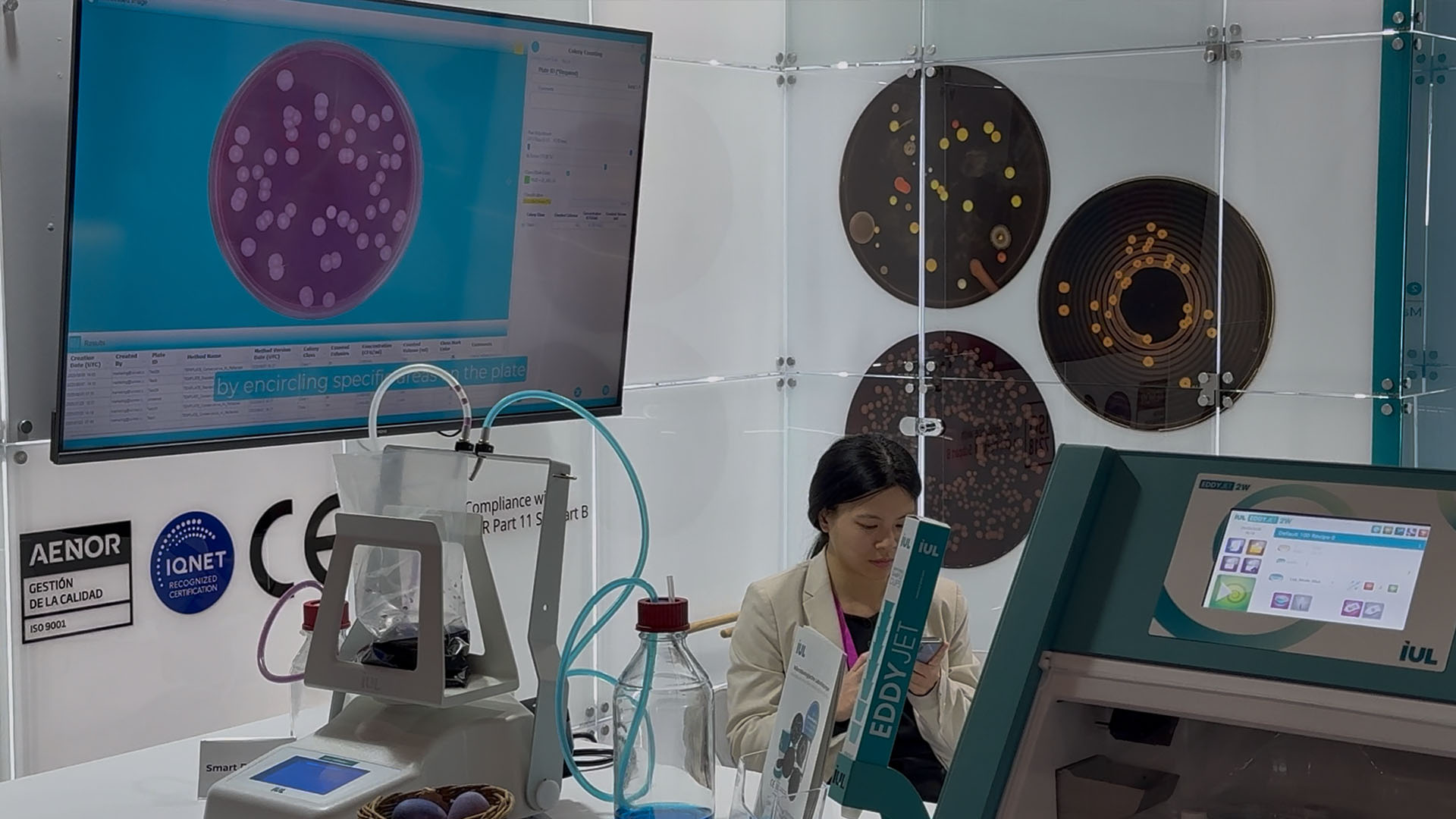
Modern laboratory robotics shows how physical processes are increasingly automated and intelligently controlled
Motif: Special Show “Digital Transformation” in Hall B2 at Analytica 2026 | Image: © Ulrich Buckenlei
The systems on display make it clear that automation does not only create speed. It creates a new level of precision, reproducibility and stability. This advantage is particularly significant in environments with sensitive samples, standardized testing processes or high regulatory requirements.
There is also another aspect. Once processes are digital and automated, they become more measurable. This means that bottlenecks, sources of error and optimization potential become visible. Automation itself becomes a data source from which further improvement potential emerges. This is where the transition from mechanical efficiency to intelligent process architecture begins.
Data becomes operational intelligence
Another central aspect of the trade fair is the changing role of data. Laboratories today generate enormous amounts of information, from instrument data and metadata to documentation and quality data. For a long time, the focus was on storing this data securely, archiving it properly and making it available when needed. At Analytica 2026, however, it becomes clear that this perspective is no longer sufficient.
Data is increasingly becoming the operational core of the laboratory. It is no longer used only for retrospective analysis, but flows directly into ongoing processes. Systems recognize patterns, connect states, provide recommendations and enable process logic to be adjusted in real time. This creates an intelligent loop in which data is not at the end of a process, but actively shapes it.
This shift is crucial for the future of laboratory work. Only when data is contextualized, integrated and actionable does true intelligence emerge from information. The trade fair demonstrates exactly this development. Platforms for data integration, scientific data management, visualization and AI-supported analysis together form a structure in which insight and action move much closer together.
This development brings decisive advantages:
- Data is translated directly into decisions
- Processes can be optimized in real time
- Simulation enables risk-free testing of new workflows
This connection between data and action fundamentally changes the role of the laboratory. It is no longer just about generating results, but about understanding relationships faster and deriving immediate process improvements.
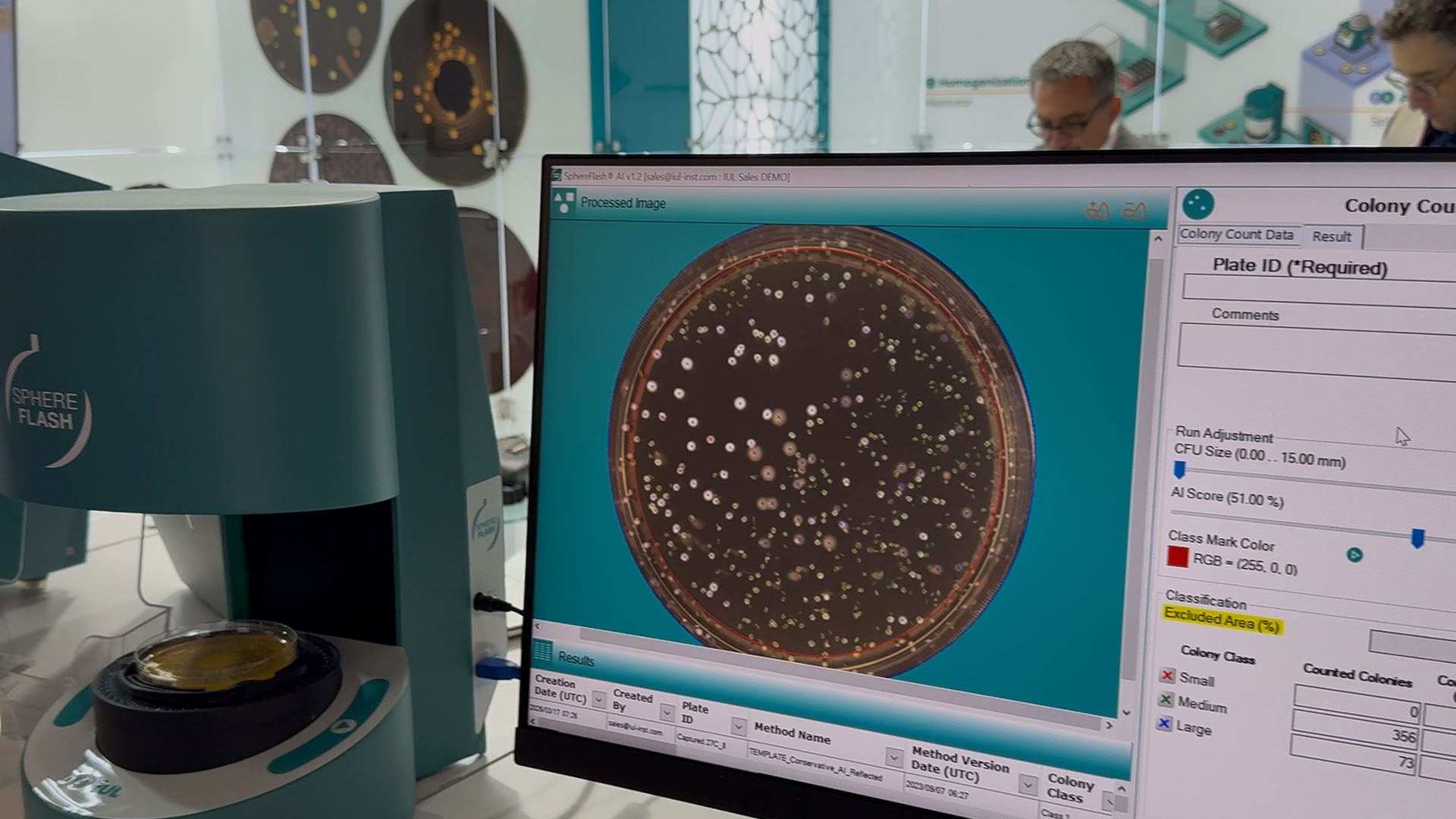
Digital platforms connect data, analysis and decision-making processes into a continuous structure
Motif: Hall B2 at Analytica 2026 | Image: © Ulrich Buckenlei
The result is a system that not only measures, but understands, learns and optimizes. This is the difference between digital documentation and operational intelligence. The systems presented at the trade fair show that data spaces, visualization and AI-driven logic have already reached a level where they can take on real process responsibility.
For companies, this creates a strategic advantage. Those who do not just collect data, but consistently translate it into decisions and process control, accelerate innovation, improve quality and reduce operational costs. Analytica 2026 shows that data is evolving from a passive raw material into an active infrastructure.
When digital intelligence controls physical processes
Perhaps the most important development is the interaction between digital intelligence and the physical laboratory world. Systems no longer just make decisions on screens, they implement them in real processes. Robots react to data, devices adjust parameters and processes are dynamically controlled based on defined states. This transition is what makes the current transformation so relevant.
In the past, digital evaluation often ended with interpretation. Today, execution begins there. Data is translated into control signals, automation becomes adaptive and physical processes respond to digital logic. This creates a new level of laboratory work in which software and real operations can no longer be considered separately.
For industrial applications, this is a major step. Only when decisions are translated into actions without delay does true operational value emerge. This affects sample handling, temperature management, material logistics, testing processes and many other areas. Laboratories thus become not only faster, but also more flexible in dealing with changing requirements.
This development can be summarized clearly:
- Systems act in real time based on data
- Laboratories become adaptive and self-optimizing
- Humans and machines work closely together
This connection is what makes the transformation so relevant. Intelligence is no longer abstract, but becomes part of physical processes. This fundamentally changes the structure of the laboratory. Machines respond, software coordinates and humans increasingly take on the role of strategic control.
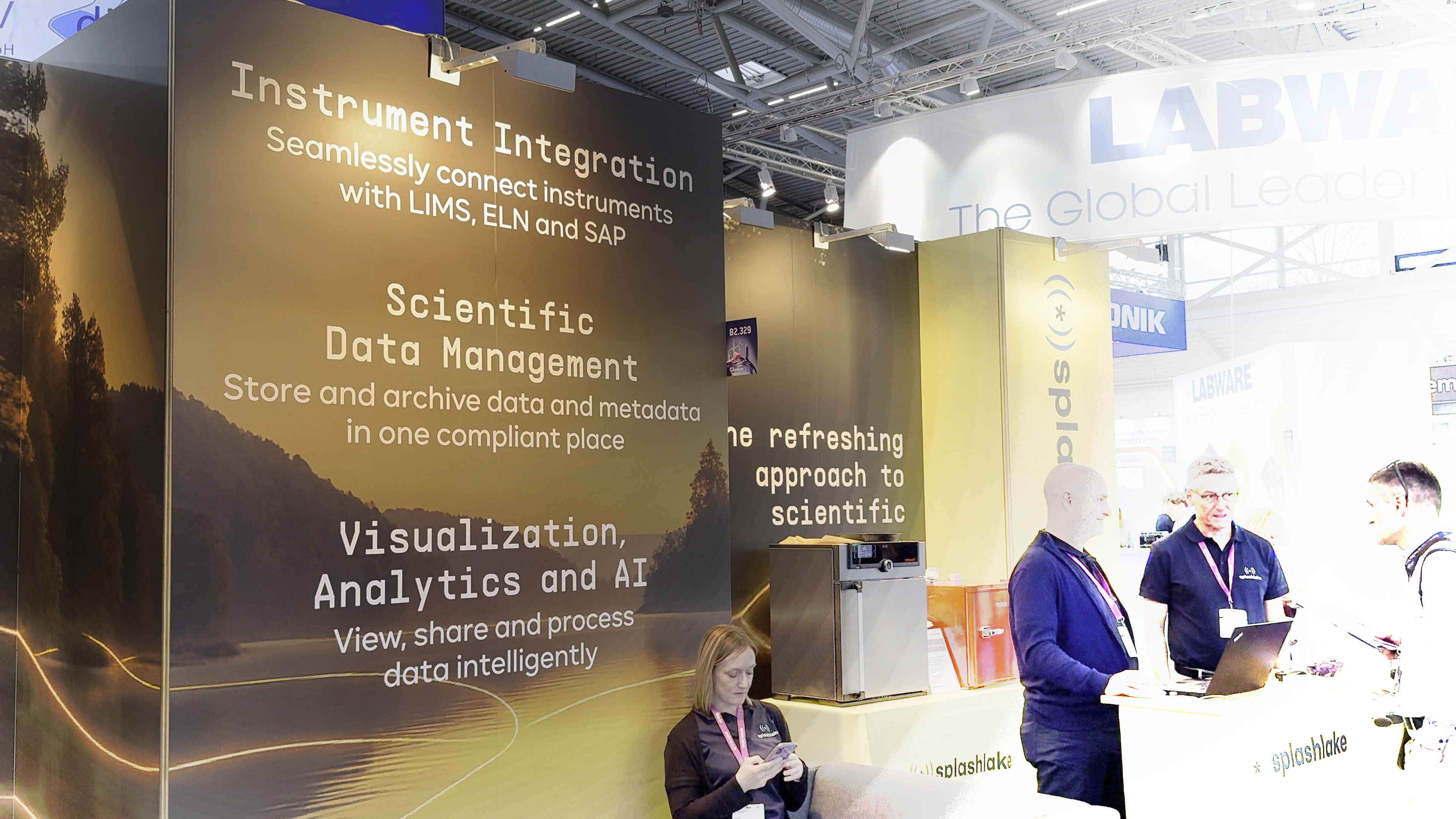
The integration of AI and automation brings intelligence directly into real laboratory processes
Motif: Hall B2 at Analytica 2026 | Image: © Ulrich Buckenlei
This creates a new form of collaboration between humans and technology. Humans do not disappear from the laboratory, but move to a higher level of responsibility. Complex exceptions, quality decisions, regulatory evaluation and strategic process design remain essential. At the same time, systems take over an increasing share of operational execution.
This hybrid logic is one of the key insights of the trade fair. The laboratory of the future is not fully human-free, but intelligently distributed. Routine tasks are automated, data is interpreted by machines and decisions are supported or executed where speed and precision benefit most.
The laboratory becomes a strategic infrastructure
Analytica 2026 clearly shows that laboratories are no longer just places of analysis. They are evolving into strategic infrastructures within companies, research institutions and industrial value chains. At a time when speed, data quality and scalability determine competitiveness, the laboratory becomes an active driver of innovation.
This change is profound. In the past, laboratories were often considered specialized functional areas with clearly defined tasks. Today, their importance extends far beyond pure analysis. They become hubs where data, decisions, quality logic and process knowledge converge. Those who build this infrastructure intelligently gain not only efficiency, but also strategic capability.
Three developments are at the forefront:
- Faster, data-driven decision-making processes
- Significant efficiency gains through automation
- New value creation through intelligent systems
This fundamentally changes the role of the laboratory. It becomes an active part of corporate management, product development and quality assurance. Analytica 2026 shows that this transformation has already begun and will continue to accelerate in the coming years.
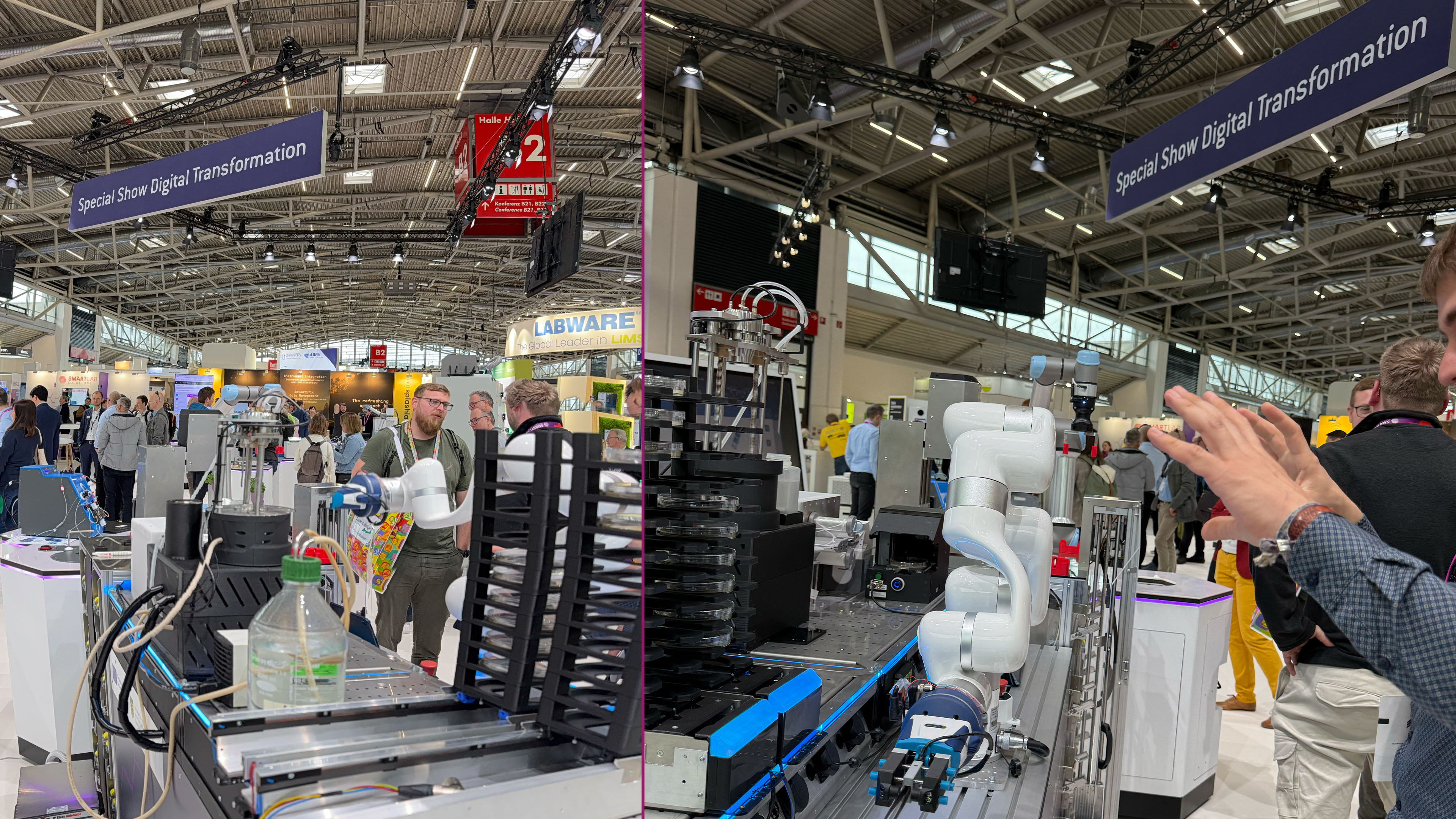
Analytica 2026 presents the laboratory as a connected, intelligent and strategic infrastructure
Motif: Special Show “Digital Transformation” in Hall B2 at Analytica 2026 | Image: © Ulrich Buckenlei
At its core, this development describes the transition into a new phase of laboratory work. Systems think along, act based on data and continuously optimize processes. This creates not only better laboratory environments, but also new industrial possibilities.
This is where the strategic relevance lies. Companies that invest early in connected, intelligent laboratory infrastructures create a foundation for faster innovation, more robust quality and better scalability. The laboratory thus becomes a place where the future is not only analyzed, but actively built.
Implement digital transformation in the laboratory now
Analytica 2026 makes it clear where laboratories are heading. Digitalization becomes the operational foundation on which processes, automation, data usage and decisions are built. Individual solutions evolve into an infrastructure that improves real workflows and enables new levels of speed, transparency and precision.
For companies, the central question is how this development can be implemented in practice. Which processes are suitable for automation. Where are meaningful entry points. What data is already available. And how can a solid business case be developed that combines technological feasibility with economic value.
This is where practical implementation begins. Many companies are not looking for abstract transformation promises, but for concrete projects that combine strategic relevance with technical feasibility. These primarily include:

The VISORIC expert team develops practical solutions for digital transformation, simulation and AI in industrial environments
Source: VISORIC GmbH | Munich
- Digital Lab Consulting → From use case to scalable strategy
- Process Automation → Intelligently automate laboratory processes
- Real-Time Data Systems → Make data directly usable
- Digital Twins → Simulate and optimize laboratories
- AI Integration → Integrate intelligence into processes
- XR Interfaces → Make systems tangible and controllable
- Proof of Concept → Validate technologies quickly
- Showcases → Make innovation visible
VISORIC combines technology, strategy and implementation into concrete projects with measurable added value. Especially in complex industrial environments, this combination is crucial, because digital transformation only becomes effective when it can be translated into real processes.
If you want to understand how digital transformation in the laboratory can be implemented in practice, talk to the VISORIC expert team in Munich. No standard pitch, but a clear view of your data, your processes and the next meaningful steps.
Contact Us:
Email: info@xrstager.com
Phone: +49 89 21552678
Contact Persons:
Ulrich Buckenlei (Creative Director)
Mobil +49 152 53532871
Mail: ulrich.buckenlei@xrstager.com
Nataliya Daniltseva (Projekt Manager)
Mobil + 49 176 72805705
Mail: nataliya.daniltseva@xrstager.com
Address:
VISORIC GmbH
Bayerstraße 13
D-80335 Munich