Windows showing the ocean instead of grey facades. Programmable architecture combines AI, smart glass, and immersive spaces into a completely new way of experiencing architecture dynamically.
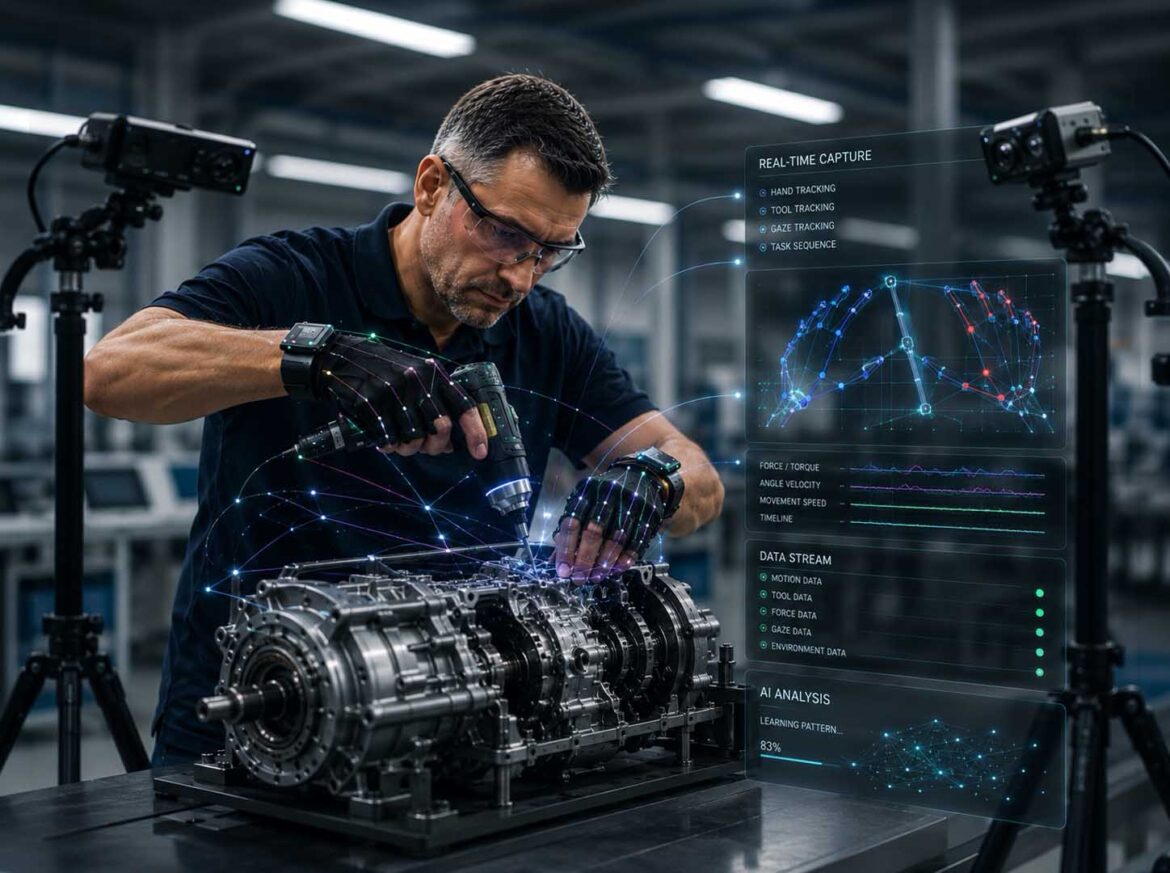
How Gaussian Splatting, Volumetric Video, and Spatial Computing are enabling a new generation of spatial knowledge transfer, immersive training systems, and industrial learning platforms.
At the same time, it becomes clear that competition in the digital economy is no longer defined solely by reach and creativity, but by the ability to translate data, AI, and systems into scalable, integrated business logics.
At Hannover Messe, it becomes clear how gaming mechanics are being used to make complex energy systems more understandable and interactively accessible.
How immersive technologies are evolving from prototypes into operational tools is clearly demonstrated at Laval Virtual 2026, Europe’s largest event for immersive technologies.
From April 9 to 11, 2026, in Laval, Laval Virtual showcases the transition of XR from prototype to real-world application. The key question is which systems are already stable and ready for use.
Analytica 2026 in Munich demonstrates how laboratories are evolving from isolated digital tools into connected, intelligent systems that control processes in real time.
NVIDIA’s annual developer conference demonstrates how artificial intelligence is evolving from software into a foundational infrastructure that is reshaping industrial processes, decision making, and entire systems.
The Mobile World Congress 2026 marks a clear turning point. Artificial intelligence is evolving from a software feature into the driving infrastructure of modern applications.